Guitar & Bass Tabs
Boston
Learn Boston's Guitar & Bass Style
Discover how Boston developed their signature guitar and bass sound, the techniques you'll encounter in their music, and the best lessons to begin your learning journey.
Boston formed in the mid-1970s in Massachusetts when guitarist and engineer Tom Scholz joined forces with vocalist Brad Delp after Scholz's prolific home-recording experiments. Scholz, an MIT-trained engineer, built a private studio and began layering guitar parts, creating a densely melodic, stadium-ready sound. The project gradually evolved into a full band and culminated in one of rock's most celebrated debuts.
The self-titled album, released in 1976, became a global phenomenon, delivering hits such as More Than a Feeling, Peace of Mind, and Rock & Roll Band. Boston's blend of soaring harmonies, hook-laden riffs, and a signature wall of guitars defined an era of arena-rock and showcased Scholz's meticulous production and tone design. The follow-ups Don't Look Back (1978) and Third Stage (1986) solidified their status as pioneers who balanced accessibility with technical ambition.
Beyond the charts, Boston influenced generations of guitarists with their emphasis on melodic leads, careful layering, and studio craft. Tom Scholz's engineering mindset and Brad Delp's expressive vocals helped redefine what a guitar-driven rock record could achieve in the pre-digital era. To this day, Boston's music remains a touchstone for players chasing bright, sustain-rich tones and interwoven guitar parts.
🎸 Want to know what gear Boston used, their playing style, and fun facts? Scroll below the lessons!
Watch the Lesson

Something About You
Boston

Rock & Roll Band
Boston

More Than A Feeling
Boston
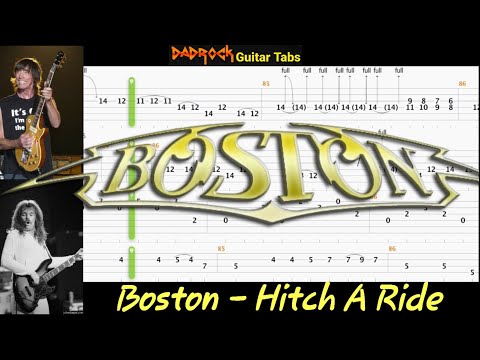
Hitch A Ride
Boston

Party
Boston

Cool The Engines
Boston

Amanda
Boston

Don't Look Back
Boston

Peace Of Mind
Boston

Smokin
Boston

Foreplay Long Time
Boston
Playing Style
Boston's playing style centers on thick, harmonized guitar parts, tight rhythms, and melodic leads. Tom Scholz's approach blends precise power-chord rhythms with layered, soaring single-note lines that create a wall-of-sound. Techniques you hear across the catalog include palm-muted riffs, clean arpeggios, melodic bends in solos, and rapid alternate picking, all anchored by a steady bass/groove. The band's signature sound comes from double-tracked harmonies and bright, sustain-rich tones achieved through careful instrument choice and studio processing, such as chorus and tasteful delay.
🎸 Gear & Equipment
Tom Scholz's tone is inseparable from the Rockman amplifier, a compact preamp that helped shape Boston's clean, punchy high-end. In the studio and on stage, Boston's guitarists used a mix of Fender Stratocaster- and Gibson-style guitars with humbuckers to achieve thick, sustain-rich leads and crunchy riffs. The production also relied on early chorus and delay effects to realize the lush harmonies heard on Foreplay/Long Time and More Than a Feeling.
Why Learn Boston Songs?
Learning Boston's catalog is a rite of passage for guitar players who want to capture the essence of classic arena rock. These songs teach essential rock skills: memorable riff-driven hooks, palm-muted power chords, clean arpeggios, and melodic lead work that sits beautifully with the vocal lines. They also demonstrate tight rhythm guitar interplay and the value of layered, harmonized parts. With 12 DadRock Tabs lessons, you can progressively build accuracy, tone, and phrasing while tackling pieces that scale from approachable to more intricate arrangements.
Did You Know?
- 1Tom Scholz built his own home studio and engineering rig, shaping Boston's meticulous, multi-tracked guitar sound.
- 2Brad Delp's soaring vocal range helped turn Boston's riffs into instantly memorable melodies.
- 3The debut album Boston (1976) became one of the best-selling debut rock albums of all time, spawning hits like More Than a Feeling and Peace of Mind.
- 4Scholz popularized the Rockman amplifier, which became a defining part of Boston's clean, punchy guitar tone.
11 Boston lesson(s) available — Start learning today!
Learn to Play Boston Guitar
Explore Boston guitar and bass lessons with a focus on riffs, rhythm parts, classic rock techniques, and practice-friendly video lessons.
Start Here
Begin with the most recognizable riffs and rhythm parts before moving into harder songs.
Techniques
Practice power chords, timing, picking control, bends, vibrato, and classic rock phrasing.
Next Step
Use the lessons below to build a practice path from easier songs to more advanced parts.
Similar Artists to Boston
If you're learning Boston on guitar or bass, these related artists use similar riffs, tunings, playing styles, and classic rock techniques.