Tablature Chitarra e Basso
Rainbow
Impara lo stile di chitarra e basso di Rainbow
Scopri come Rainbow ha sviluppato il suo caratteristico stile di chitarra e basso, le tecniche presenti nella sua musica e le migliori lezioni per iniziare.
Rainbow emerse dalla scena hard rock britannica della fine degli anni '70, formata nel 1975 dal chitarrista Ritchie Blackmore dopo l'uscita dai Deep Purple. Con Ronnie James Dio alla voce, la band fuse hard rock con sfumature neoclassiche della chitarra, creando un suono al tempo stesso martellante e melodico. I loro primi dischi tracciarono le basi per il rock orientato al metal, e i loro singoli di grande successo consolidarono Rainbow come una delle realtà più influenti dell'epoca.
Durante l'epoca Dio (1975–1979), Rainbow pubblicò una serie di album che definiscono l'epoca—Ritchie Blackmore's Rainbow (1975), Rising (1976), e Long Live Rock 'n' Roll (1978)—che portarono brani duraturi come Man on the Silver Mountain, Kill the King, e Stargazer. Le orchestrazioni epiche della band, le texture a doppia chitarra e la maestria vocale contribuirono a plasmare l'estetica neoclassica e power-metal che avrebbe influenzato intere generazioni di musicisti.
L'eredità di Rainbow va oltre la formazione originale, con incarnazioni successive e reunion che continuano a ispirare chitarristi in tutto il mondo. Il loro catalogo resta una risorsa di riferimento per imparare riff-writing, phrasing, e l'arte di bilanciare ritmo e lead lines in un unico pezzo. Su DadRock Tabs puoi esplorare 15 Rainbow lezioni che traducono questi leggendari riff in pratica accessibile, passo-passo, per musicisti dal principiante all'intermedio.
🎸 Vuoi sapere che equipaggiamento Rainbow ha usato, il suo stile di esecuzione, e curiosità? Scorri sotto le lezioni!
Guarda la lezione

Do You Close Your Eyes
Rainbow
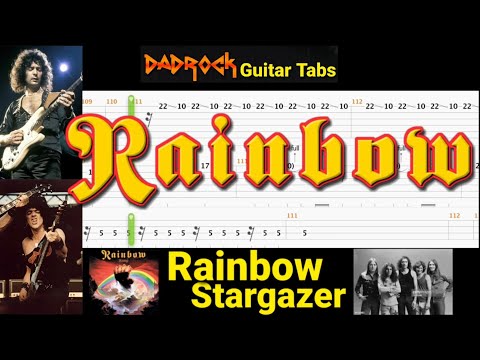
Stargazer
Rainbow

Man On The Silver Mountain
Rainbow

Self Portrait
Rainbow

Sixteenth Century Greensleeves
Rainbow

If You Don't Like Rock 'N' Roll
Rainbow
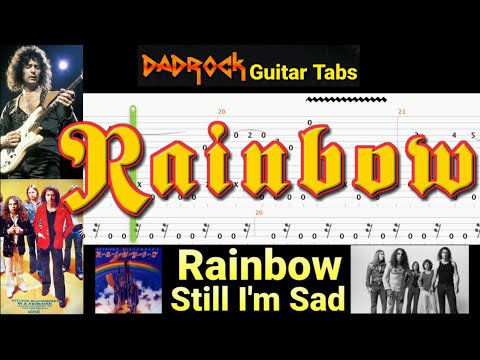
Still I'm Sad
Rainbow

A Light In The Black
Rainbow

Run With The Wolf
Rainbow

Kill The King
Rainbow
Stile di Esecuzione
Lo stile di Rainbow è definito da un lavoro di chitarra melodico, neoclassico, stratificato su ritmi rock potenti. L'approccio di Blackmore combina alternate picking preciso, rapidi passaggi scalari e phrasing espressivo, spesso incorniciato da riff palm-muted e robusti power chords. Le lead lines della band utilizzano frequentemente scale modali e phrasing orientato sui bend per ottenere quella sonorità influenzata dalla tradizione classica e cinematica. Brani come Kill the King offrono sezioni incisive, guidate da riff, mentre Stargazer presenta arpeggi ampi e melodie drammatiche. Lavorando sui pezzi di Rainbow, i musicisti sviluppano un picking accurato, una buona fluidità sul fretboard, una phrasing dinamica, e la fiducia nel mescolare parti ritmiche e lead—competenze fondamentali che si traducono nel classic rock e nel metal.
Perché imparare canzoni di Rainbow ?
Imparare i Rainbow brani costruisce le fondamenta del rock: riff ritmici serrati, picking preciso, palm muting per la spinta, e l'arte di usare arpeggi e idee melodiche di lead. Il catalogo va da pezzi accessibili, focalizzati sui riff, a passaggi più ampi ed epici che sfidano timing, phrasing e dinamiche. Lavorando su queste canzoni, i musicisti sviluppano familiarità con il fretboard, musicalità nel phrasing, e la fiducia nel mescolare parti ritmiche e lead—competenze fondamentali che si traducono nel classic rock e nel metal.
Lo Sapevi?
- 1Rainbow fu formata nel 1975 da Ritchie Blackmore dopo l'uscita dai Deep Purple, e i loro primi album contribuirono a definire una sonorità hard rock neoclassica.
- 2Gli arpeggi rapidi di Stargazer e l'arrangiamento drammatico ne hanno fatto un rito di passaggio per molti aspiranti chitarristi metal.
- 3I vocalizzi elevati di Ronnie James Dio abbinati alla chitarra di Blackmore hanno creato una delle partnership più durevoli del rock, influenzando intere generazioni di musicisti.
- 4La formazione di Rainbow è cambiata molte volte, ma i loro riff iconici e melodie rimangono un pilastro nell'educazione del classic rock.
10 Rainbow lezione/i disponibile/i — Inizia a imparare oggi!
Domande Frequenti
Impara a suonare la chitarra con Rainbow
Esplora le lezioni di chitarra e basso di Rainbow, con particolare attenzione a riff, parti ritmiche, tecniche del rock classico e video facili da seguire.
Inizia da Qui
Inizia con i riff e le parti ritmiche più riconoscibili prima di passare ai brani più difficili.
Tecniche
Esercitati con power chord, timing, controllo del plettro, bend, vibrato e fraseggio tipico del rock classico.
Passo Successivo
Usa le lezioni qui sotto per creare un percorso di studio, dai brani più semplici alle parti più avanzate.
Artisti simili a Rainbow
Se stai imparando a suonare Rainbow con la chitarra o il basso, questi artisti simili utilizzano riff, accordature, stili di esecuzione e tecniche di rock classico comparabili.